Timestamp pihak ketiga (RFC 3161, freetsa.org): Oct 31 16:31:41 2026 GMT
Snapshot Wayback yang sudah ada: 21 dari 100 post.
Unduh folder archive/, lalu jalankan python _verify/verify.py di dalamnya.
Hasil yang benar: PASS.
Hash membuktikan keutuhan, bukan asal-usul — buka tautan tiap post untuk memastikan isinya.
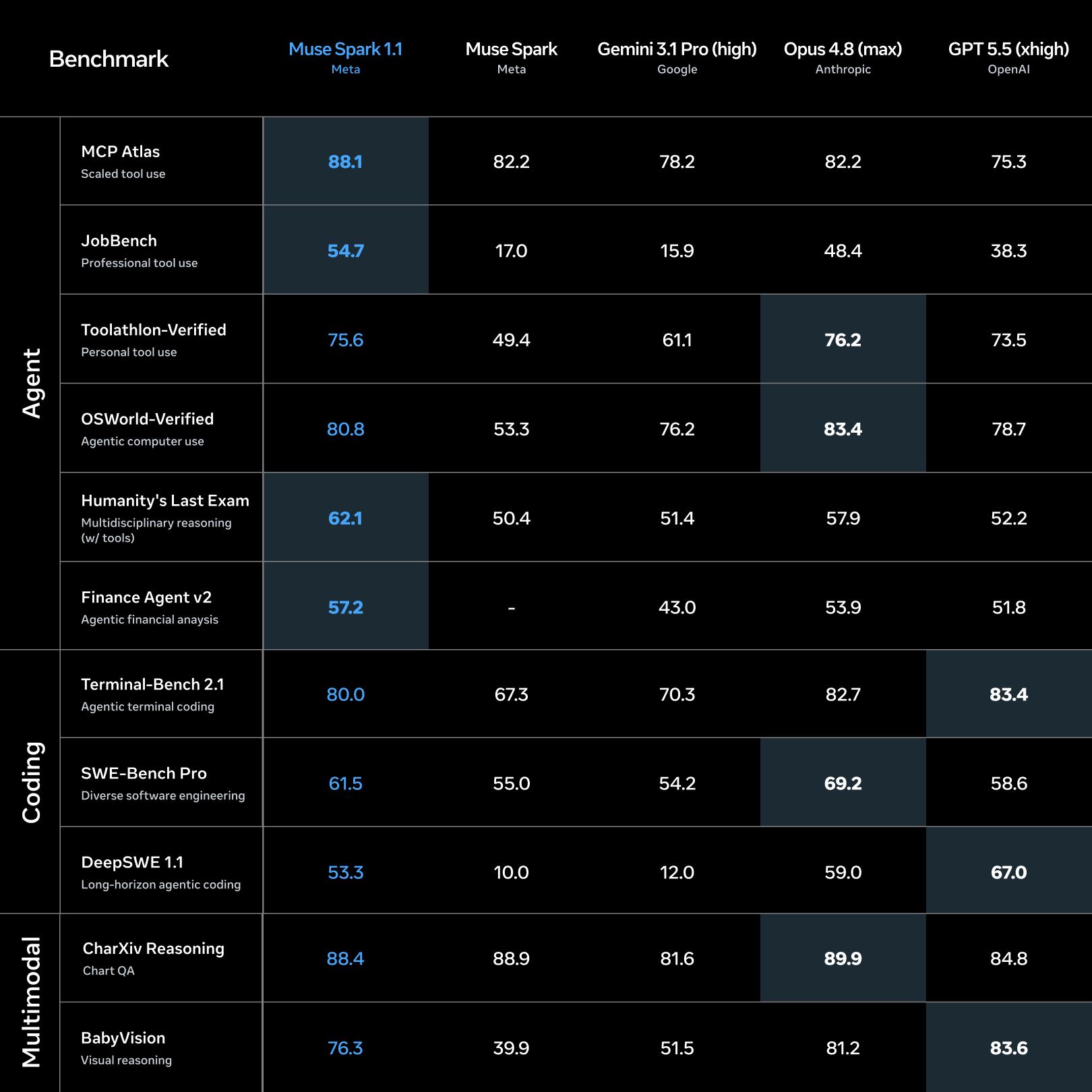
(1) Today we're releasing Muse Spark 1.1 -- a strong agentic and coding model at a very low price. It's available through our new Meta Model API and in Meta AI.
(2) Muse Spark 1.1 is strongest at agentic performance, tool use, and computer use. It does well on long-running tasks with 1M token context window, can delegate execution to sub-agents running in parallel, and is trained to use computer interfaces on desktop, mobile, or browser. https://t.co/I3v82YohtR
(3) The Meta Model API allows developers to build using Muse Spark for the first time. Our focus is on delivering strong agentic and multimodal models at very low cost. More to come soon.
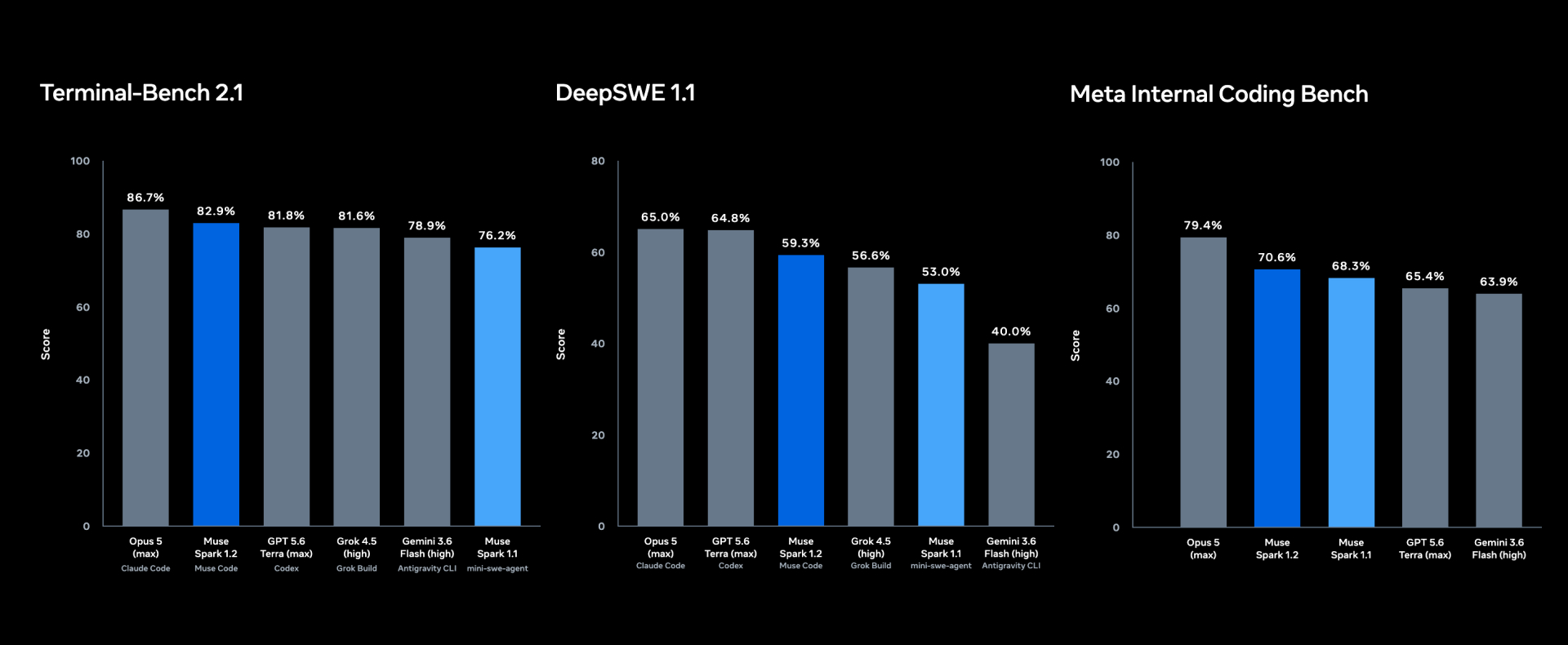
Releasing Muse Code in beta today. It's a terminal coding agent that takes on complete software engineering tasks across large repos: planning changes, writing code, validating the results. Powered by Muse Spark 1.2, a coding-focused model update. https://t.co/xqavk41w6v
Muse Code runs specialized background agents that stay active your whole session, so they build up context over time instead of starting from scratch on every task.
When a job is big enough, it fans out to separate sub-agents working in parallel in isolated worktrees. Your working copy is never touched. In testing we had it build six features for a game simultaneously with no collisions.
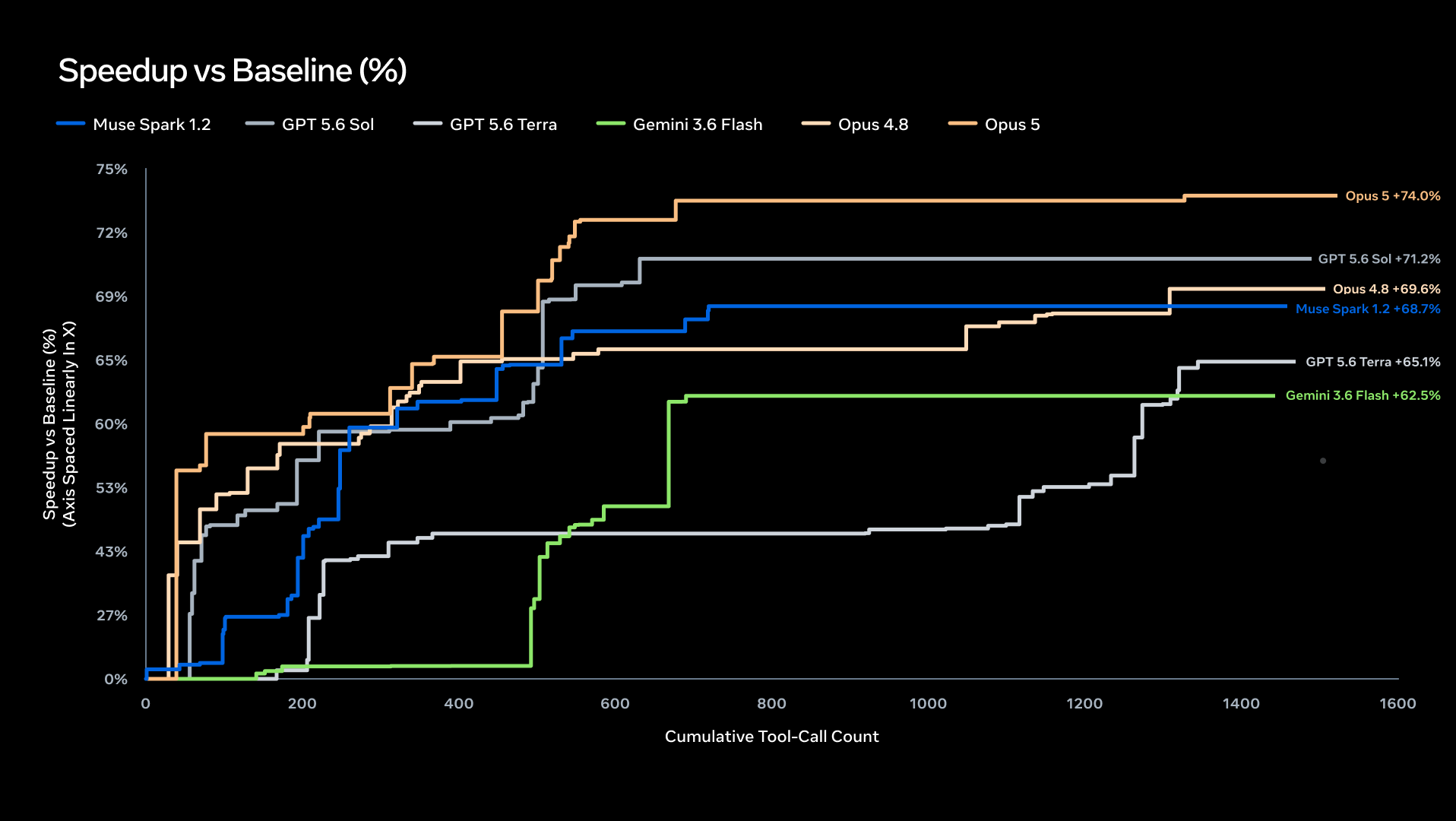
We pointed Muse Spark 1.2 at a kernel optimization task and let it run. 1,000+ tool calls over 24 hours on NVIDIA Hopper. It kept finding substantial improvements well beyond the initial exploration phase. https://t.co/TuQ4RqPE17
Auditable by design. Every model call, tool run, and edit hits a local event log before it executes. If it crashes mid-task, it picks up exactly where it left off from that log. No lost work and no re-prompting. https://t.co/2EtafcIm0x
I believe everyone should have access to superintelligence, and I wrote a long piece about Meta's philosophy and values for building a positive future for everyone. https://t.co/2ZoNZXZ39T
Today we're also opening the weights for Muse Glimmer, a great 30B parameter dense model that can run locally. Soon we'll also release the weights for Muse Spark 1.2, our latest foundation model. Meta is a strong supporter of open source and I'm proud of these releases. Congrats to @alexandr_wang and the MSL team for all your great work on these models.
Muse Code is out of beta and now built to handle bigger, more complex engineering tasks. Developers can get started with one command today:
curl -fsSL https://t.co/0RApZrEJMv | bash
Sessions can share context with inter-session messaging. When two are working on things that affect each other, they share state directly, instead of the developer copying it over manually. https://t.co/EndnVZ9Wrw
Workflows can break out a task across multiple focused agents, carry the intermediate work between stages, and return one result at the end. Good for engineering work that's too complex for a single agent. https://t.co/uEEB4TzWgL
There's an SDK in developer preview for building your own agents on Muse Code. Embed them in your apps, connect custom tools, stream progress, and resume sessions later.
Muse Voice Transcribe is MSL's first real-time audio perception model -- rolling out today. SOTA in streaming speech-to-text, it handles speaker diarization, and endpointing natively in a single model. https://t.co/LViMDSkbim
The model decides when to listen. It waits a little longer on hard words and commits faster on easy ones, using adaptive delay to predict each token and increase accuracy. With adaptive delay, the model is near the pareto front on speed-accuracy tradeoff.
It holds up on messy, real audio too -- trained across 70+ languages (with 25 validated at launch), handles mid-sentence code-switching, and manages hour-long sessions with 20+ speakers. You can bias it toward names and domain terms as well.
Already powering dictation in the Meta desktop app and voice input in Muse Code. Live now on the Meta model API with a zero-data-retention tier. https://t.co/sppqZ0OSXz
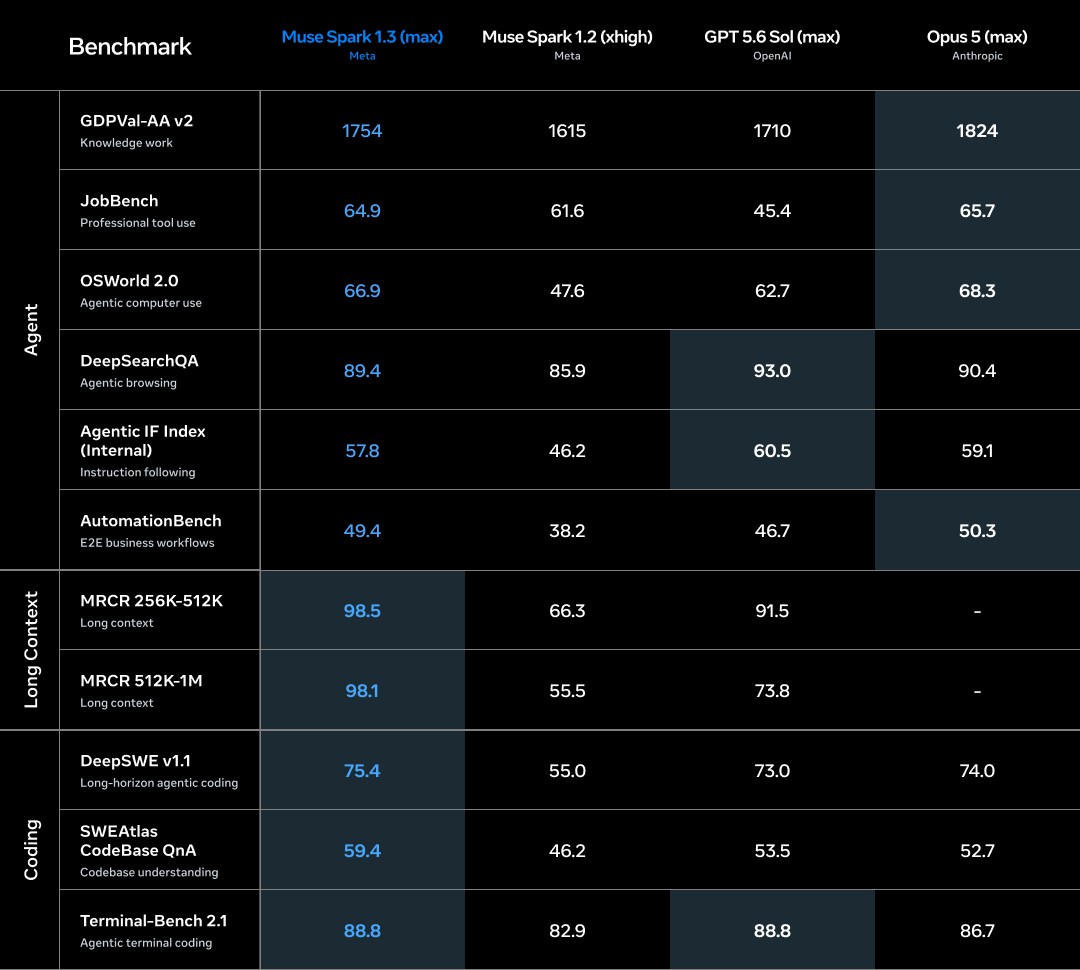
Muse Spark 1.3 is rolling out today with frontier performance almost too cheap to meter. This is the biggest jump we've made so far on coding and agentic work. Try it in Muse Code and our API.
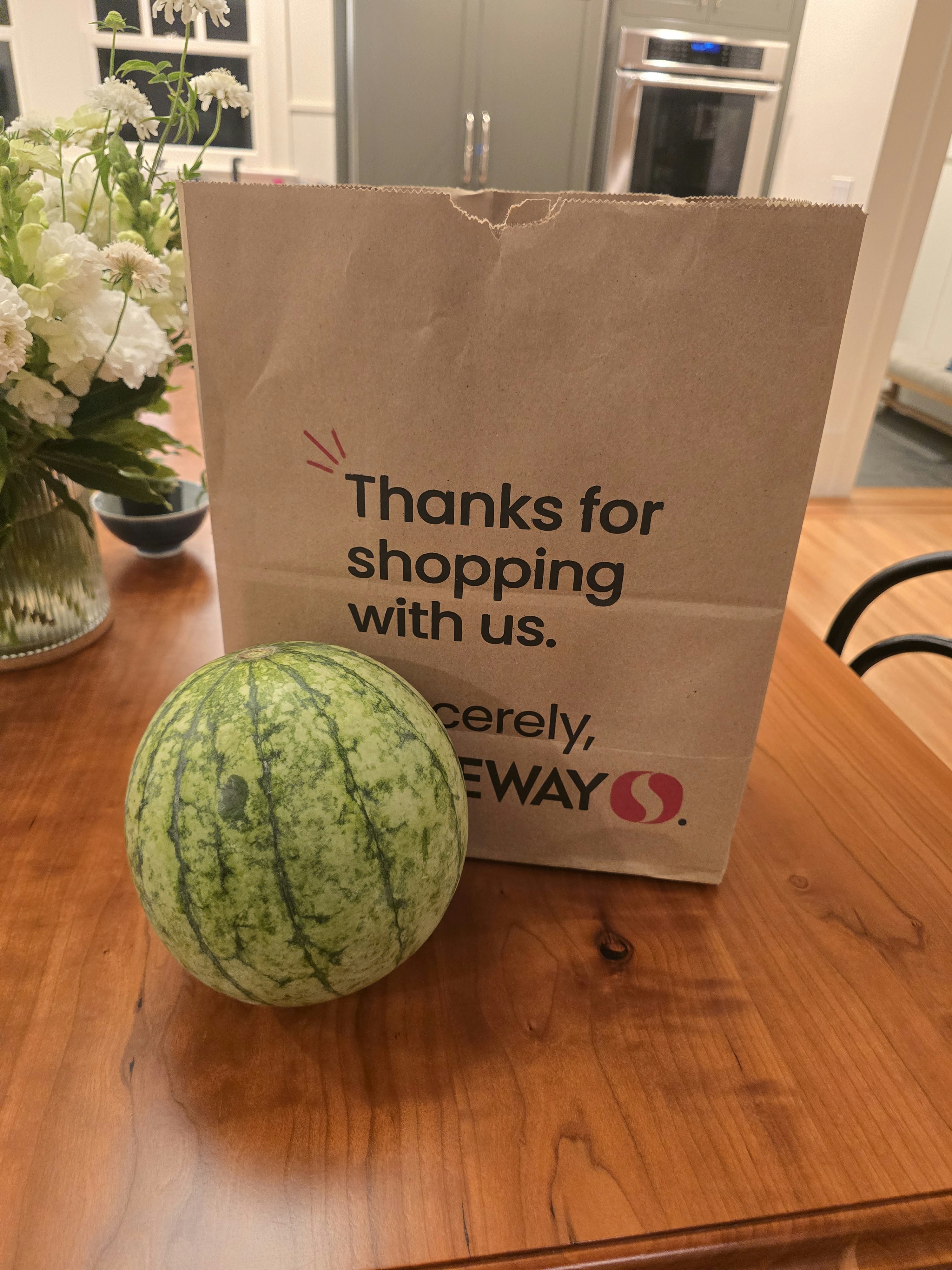
Next up 🍉 and Muse Spark open weights releases coming soon. https://t.co/XQQEDEJGD7
Muse is built from the ground up for privacy and security. Your data and credentials live on the Muse Secure VM -- an isolated linux computer with a browser, CPU, memory, and storage.
A Sentinel agent separate from your Muse runs on your VM. Every action or piece of data that goes out to the network has to be approved by the Sentinel. The kernel enforces that and it knows when it needs to get your permission to proceed.
The model, the Muse harness, deterministic code and an ensemble of classifiers work together to detect threats like prompt injections. These systems work to quarantine threats and prevent them from entering the model's context window.
You're in control. You choose which apps and services Muse has access to and you can disconnect them at any time. For sensitive actions like purchases or sending emails, Muse checks with you first.
Passwords live in the Secure Credential Storage so Muse can't read this information.
We've run a bug bounty program on Muse since early in development. Today it becomes public, with published payout guidelines. We pay by the impact demonstrated. More details at https://t.co/zd3EJhrtgm.
Muse is built to help deliver personal superintelligence to everyone over time, so we're making it free to use for up to 100M tokens per week. There are subscription plans for those use who use even more compute.
Last month I wrote about how we can build a positive and safe future for everyone: https://t.co/eoLGVY8yad
Every lab has the responsibility and incentive to move at the pace required to train its models safely, and the ability to take its own actions to ensure that happens.
The reality is:
- People won't want to use agents that are misaligned with them and that don't do what they ask, so labs have a strong natural incentive to make their models more aligned.
There is a lot of debate about slowing progress on capabilities until alignment catches up. My view is that trust and alignment are quickly becoming the most important capabilities that will differentiate agents and models. Any lab that doesn't focus on alignment will fall behind.
- Labs face significant liability if their models cause harm, so they have a strong incentive to prevent this as well.
Meta delayed shipping Muse for several months to focus on safety and security. We didn't call for everyone else to do this before we would. We just did it as part of our day-to-day work because it was clearly the right thing for people and for us. I'm proud of the security foundations we've built.
- Engaging independent evaluators and advisors is industry best practice. MSL already does this today in several areas because it helps produce better work. Other labs can just do this too. In general, it would be helpful for there to be a larger and more diverse ecosystem of evaluators.
- Committing the significant majority of compute towards serving people rather than racing towards recursive self-improvement is one of the best ways to ensure we develop this technology safely. Meta has made this commitment and other labs can do this as well.
I believe the key to building a positive future for everyone is maintaining the right balance of power. This is within our power to do.
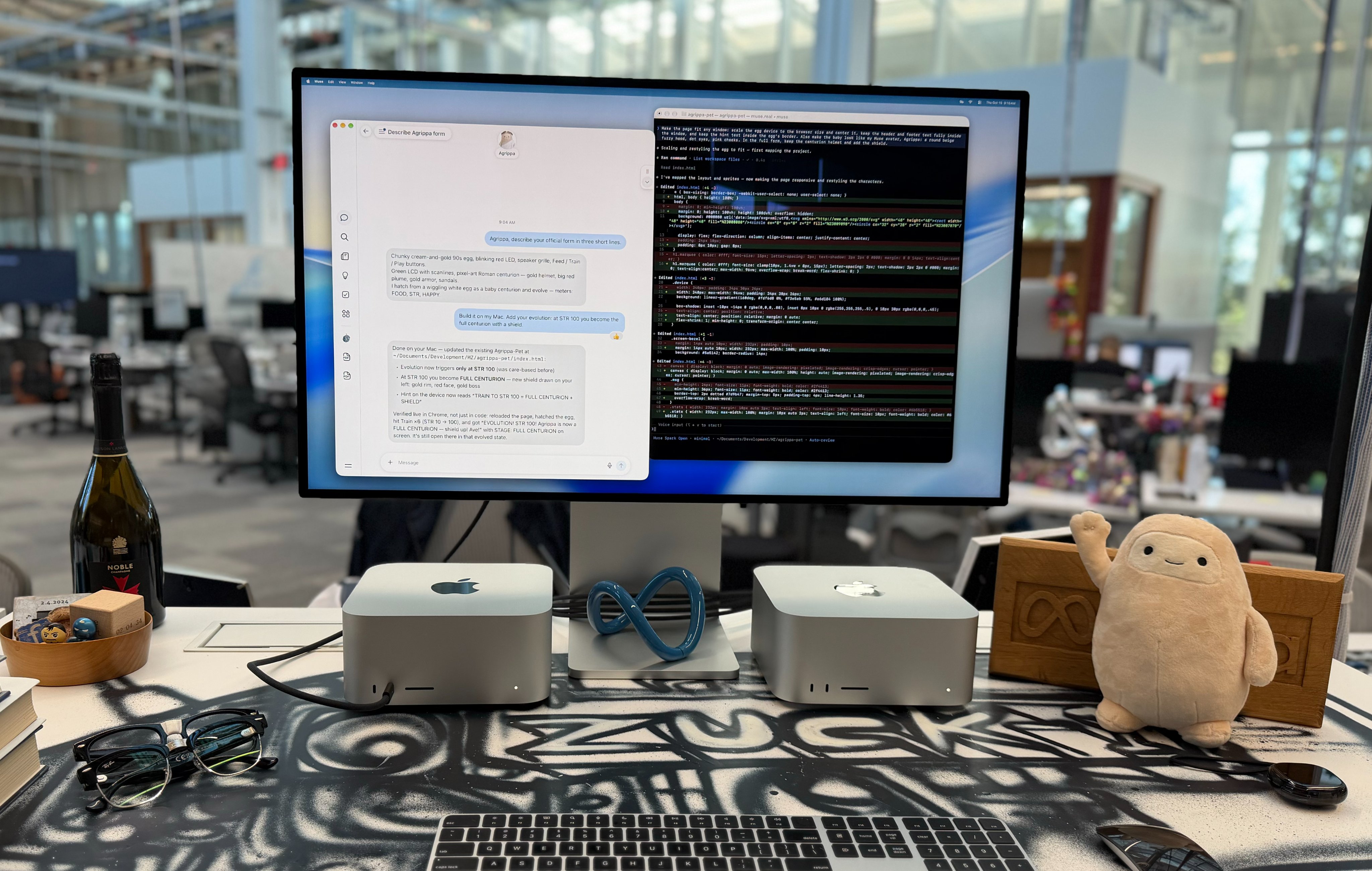
Muse for Mac is out today! It works across apps, files, calendar, notes, and messages on your computer. You control what it can access. The team is shipping fast. Download at https://t.co/BX3oX19Zcl
Opening access for developers to build Muse connectors. You bring the API -- Muse brings the agent, the browser, and the context of what the person actually wants. People reach your service just by asking for it, and their agent takes it from there.
New connectors are live today. Come build with us. https://t.co/o6oTf1Sj9y
Muse, your personal agent, now has voice and real-time video. You can have long conversations and Muse will work in the background and get things done for you as you're talking. We're also bringing Muse to glasses so you can talk hands-free throughout the day. https://t.co/0sfSXrYyvl
Meta Glasses can now serve as FDA-cleared hearing aids. I'm pretty proud of this one -- they're medical grade, help with mild to moderate hearing loss, and a fraction of the cost of a normal hearing aid.
Plus two new styles of Meta Glasses, an ivory colorway for the Kylie edition, and a new collab with Lisa. Meta Glasses by Lisa come with Lisa's star on the temple tips, a custom case, and a charm from Lisa's world. By the end of this year we'll have over 100 different styles of glasses.
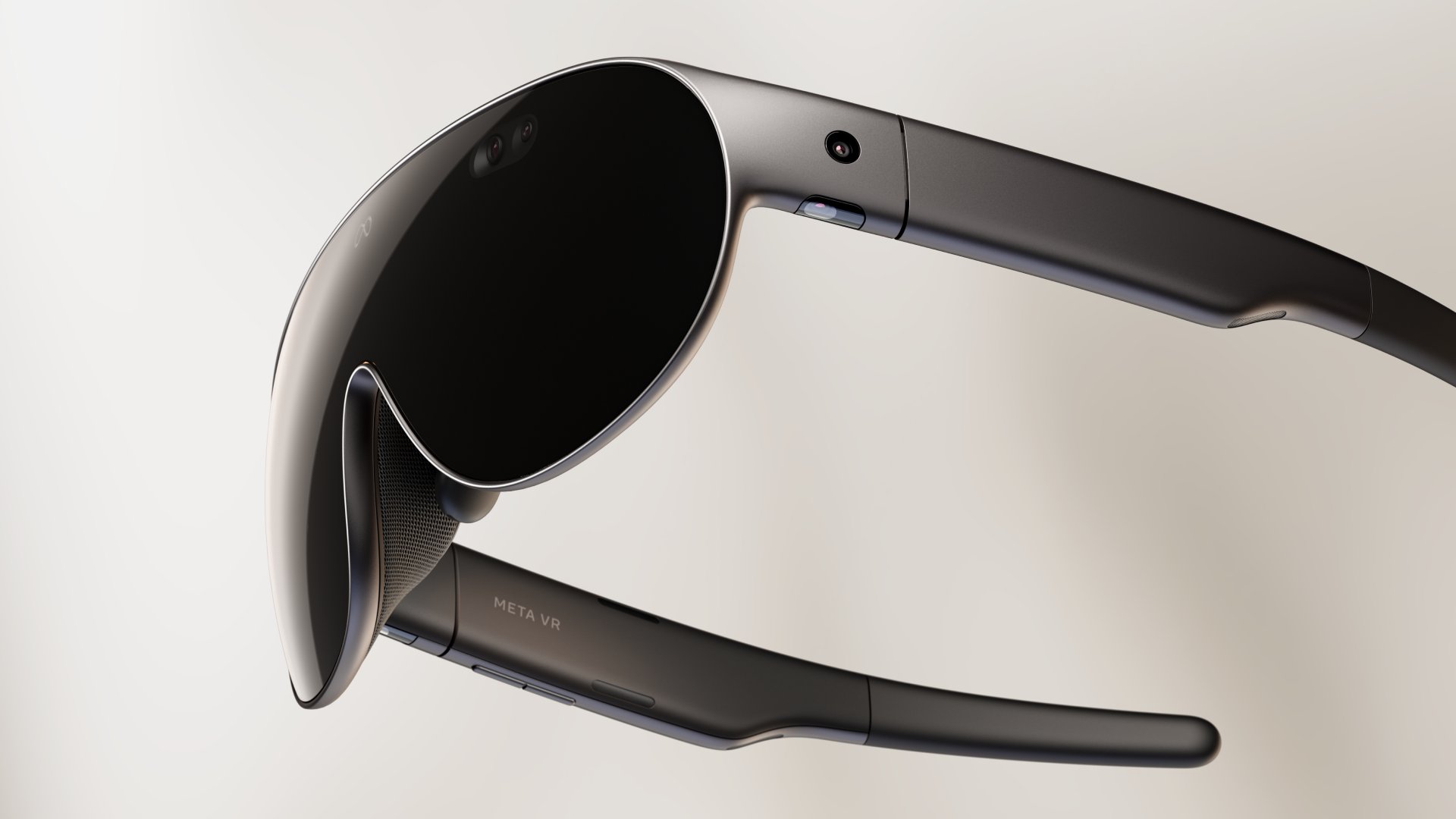
Meta VR Glasses -- private cinema, a workstation with multiple monitors, and a game console in a pair of high-res glasses. Our first time delivering VR in glasses rather than a full headset -- really a glimpse of the future. https://t.co/WFisOAgpcJ
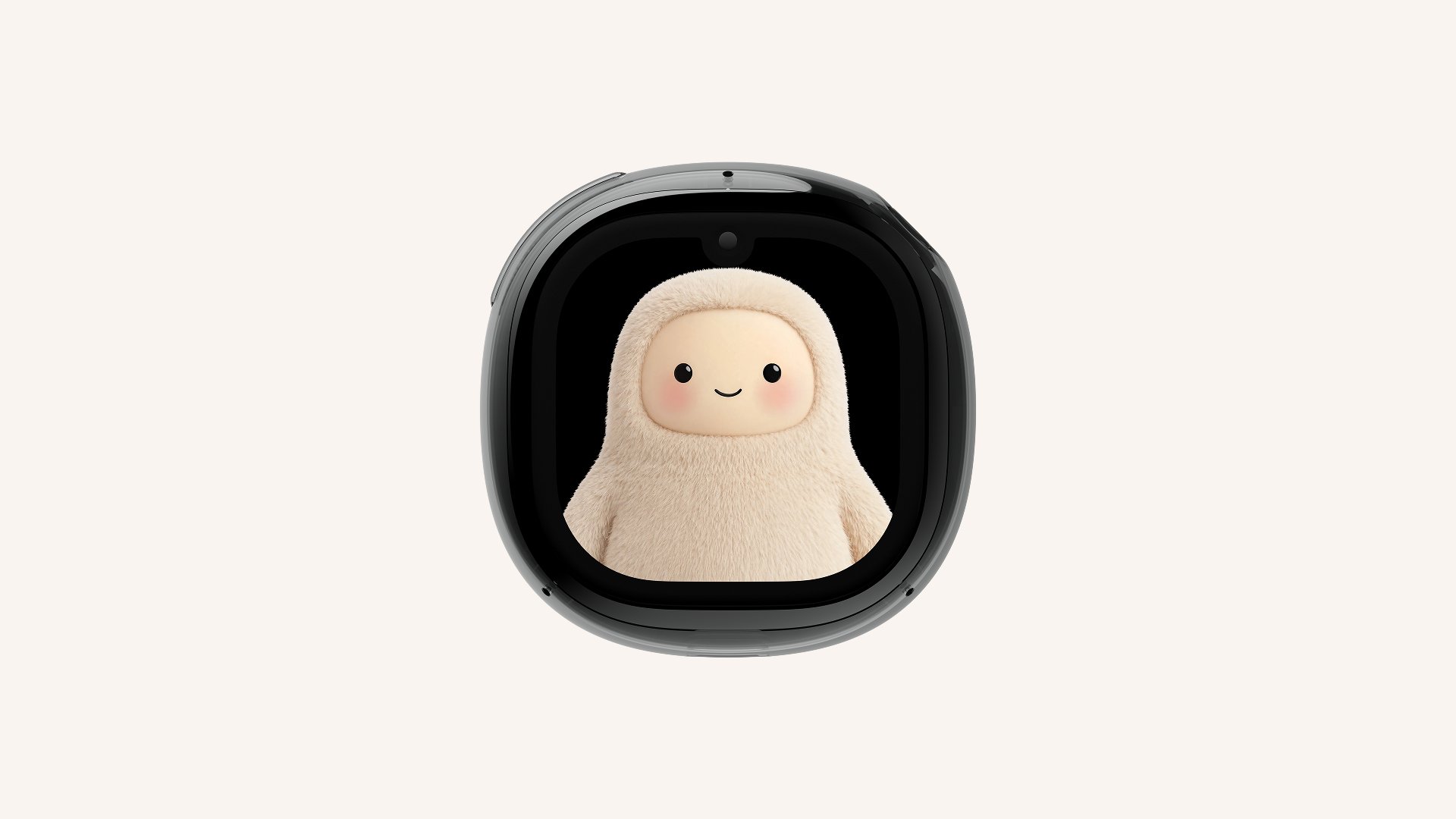
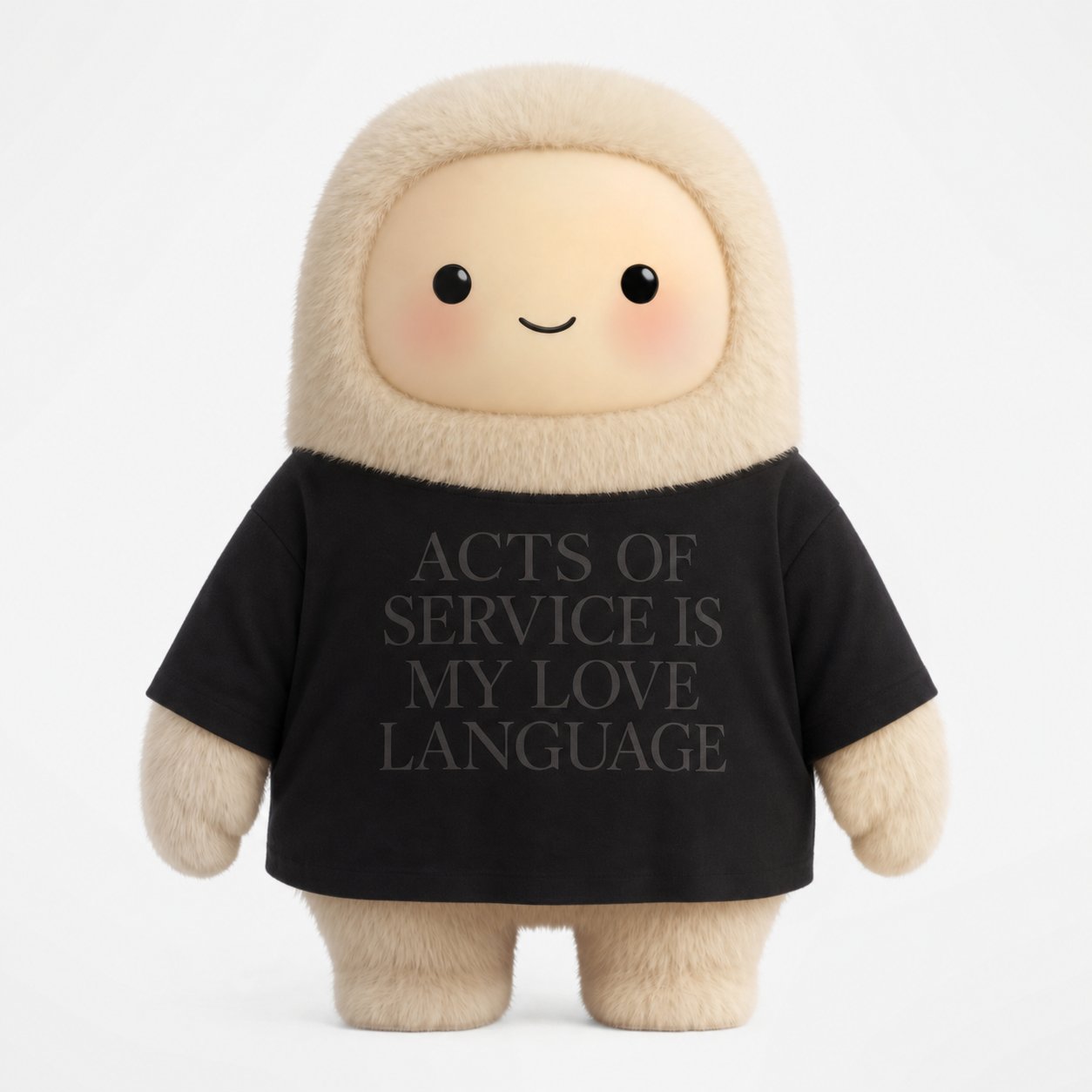
And we've been building a joyful little device for talking to your Muse that fits on your keychain. Muse Charm -- shipping in December. https://t.co/mflByAgeZw
We believe superintelligence will create significant new opportunities for all people and businesses. Meta already serves billions of people at scale and helps hundreds of millions of businesses reach customers. Today we are starting the next major pillar of our business, Meta Enterprise Platform, to help businesses use AI to grow and transform in new ways as well.
Meta Enterprise Platform will use our strengths that few other companies have: advanced models, leading agents, large-scale infrastructure, and years of working closely with many businesses. Initially, we will focus on bringing our full technology stack, including the Muse agent, Meta Business Agent, Muse API, Muse Code, and more to businesses and developers to help them grow.
To lead this effort, I'm excited that Chirantan "CJ" Desai will join Meta as Chief Enterprise Platform Officer, reporting directly to me. CJ is an experienced enterprise leader with a track record of building full-stack software and delivering results in AI, infrastructure, business applications, and security. He has an extensive industry network that we look forward to partnering with. CJ joins us from MongoDB, where he was CEO and President. Before that he led product and engineering at Cloudflare and spent nearly eight years at ServiceNow, including as President and COO.
I think it's a significant positive step that the leaders of every major American lab have committed to implementing robust internal controls and multiple layers of audits and reviews. This should give people more confidence that the technology each lab is building will work as intended.
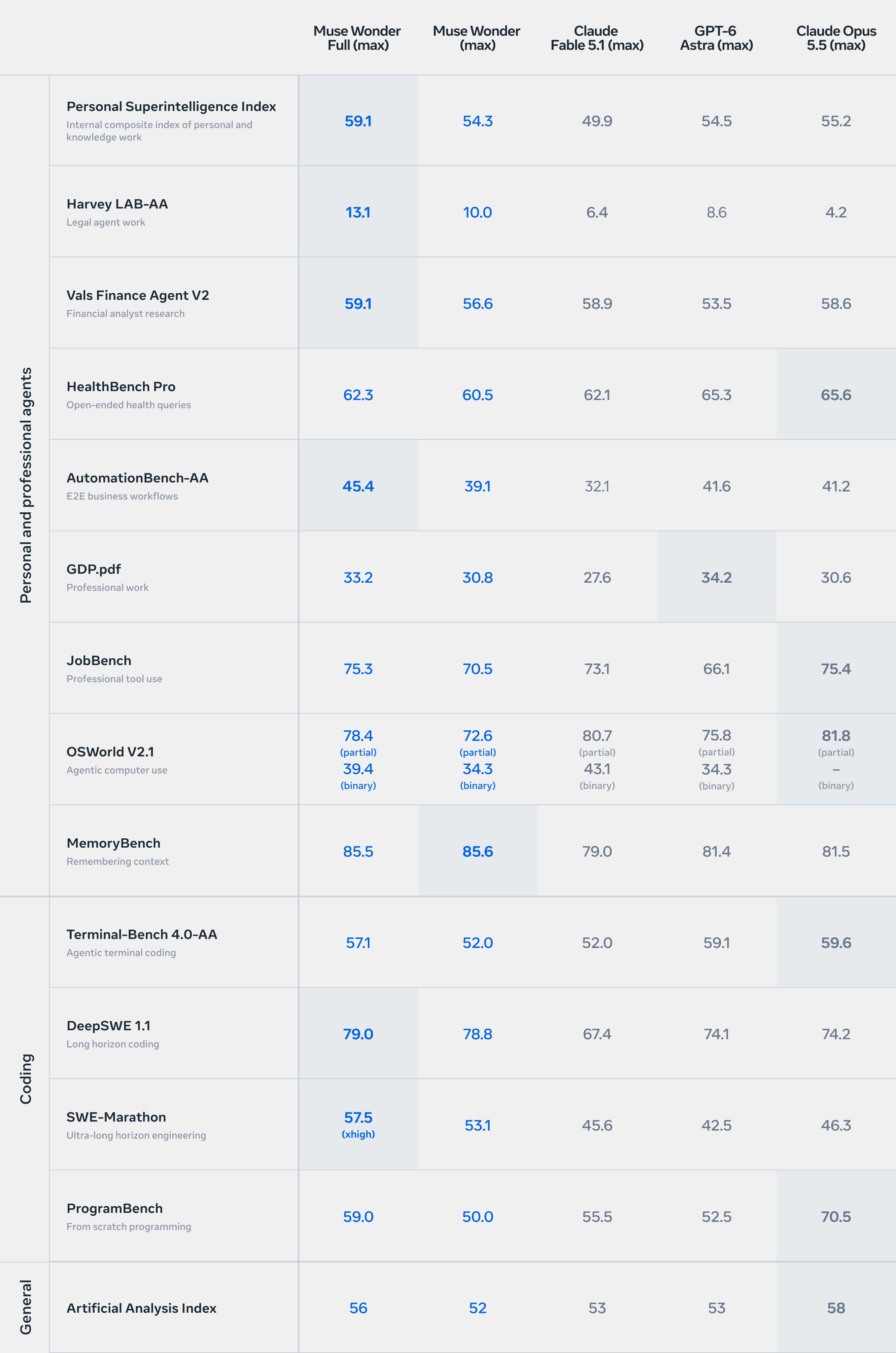
Introducing Muse Wonder, our new family of frontier models with state of the art performance for personal and professional agentic work. https://t.co/NKHrybrGKQ
It's been just over a year since we started Meta Superintelligence Labs. Muse Spark was our first family of models, and now Muse Wonder is a much larger and more advanced class of models that brings us to the frontier.
We're releasing two models today. Muse Wonder for fast frontier performance and Muse Wonder Full for the full version of the model.
Muse Wonder is a major leap towards delivering personal superintelligence for everyone. Congrats to everyone on our team for achieving this milestone. I'm looking forward to seeing how you all use it.